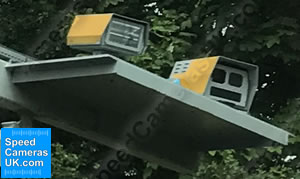
Answers to the most common questions UK motorists ask about variable speed cameras on UK motorways - covering how the grace period works when limits change, whether cameras enforce the national speed limit when no variable limit is displayed, how to find out what speed was shown on a gantry, and what to do if you receive a Notice of Intended Prosecution. Variable speed limit sections use camera types including Gatso, HADECS 3, SPECS, and VECTOR.
SpeedCamerasUK.com does not operate any UK speed cameras and has no connection to UK Government, the Police, or any Safety Camera Partnership. We are unable to advise on individual speeding cases or the progress of a speeding offence. If you have a question not answered below, please use our contact form.
How variable speed cameras work
Are variable speed cameras point cameras or average speed cameras?
It depends on the camera type in use at the specific location. Gatso and HADECS 3 cameras measure speed at a single fixed point. SPECS and VECTOR cameras are average speed systems that calculate speed between paired camera locations. Variable speed limit sections of motorway can use either type, and some sections use both. If you are caught speeding, the NIP will state which camera type was used.
Do variable speed cameras operate 24 hours a day, or only when a reduced speed limit is displayed?
This varies between Police forces and motorway sections. An increasing number of Police authorities choose to enforce the 70mph national speed limit via variable speed cameras even when no reduced limit is in force and the gantry signs are not illuminated. If you are caught speeding on an unlit gantry, the camera was most likely enforcing the national speed limit. You should not assume a camera is inactive simply because the overhead signs are off.
Can a variable speed camera catch me if the gantry sign was not displaying a speed limit?
Yes. If the gantry signs were not illuminated and you were exceeding 70mph, the camera may have been enforcing the national speed limit. Some Police forces leave variable speed cameras active 24/7 regardless of whether a reduced limit is in force. The NIP will confirm what limit was being enforced at the time.
Does another vehicle triggering the gantry camera mean I could receive their fine?
No. The photographic evidence captures each vehicle's position relative to the white road markings on the gantry. Two photographs are taken in quick succession, allowing each vehicle's speed to be individually calculated. If a faster vehicle triggered the camera and you were travelling within the limit, the evidence will confirm this.
Can I receive multiple NIPs from a single variable speed camera zone?
In a single continuous variable speed camera zone, you would not normally receive multiple NIPs for the same journey. However, if the variable speed check zone ends and begins again as a separate zone on the same motorway, separate offences could be generated. If in doubt about your specific circumstances, consult a motoring solicitor.
Grace periods and speed limit changes
Is there a grace period when a variable speed limit changes?
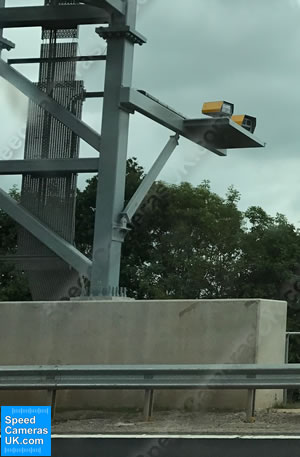
Surrey Police have confirmed to SpeedCamerasUK.com that they operate a 1 minute delay tolerance when the speed limit on their section of the M25 is reduced, to give motorists sufficient time to react and slow down. However, this is Surrey Police's procedure only - other forces may operate a different policy or no grace period at all. If you have received a NIP in connection with a variable speed limit change, contact the issuing Police force directly to ask about their specific grace period policy.
I accelerated as I saw the gantry sign increase to a higher speed limit, but the camera flashed as I passed underneath - am I liable?
Surrey Police have confirmed a 1 minute grace period when limits change on their section of the M25, applied when limits reduce. If the limit was increasing and you accelerated to match the new limit displayed, you should not have been speeding. However, if the camera recorded you above the previous lower limit at the point of the gantry before the change had been processed by that specific camera, you may receive a NIP. Contact the issuing Police force and explain the circumstances - ask them to confirm the exact time the limit changed at that gantry location and compare it to the time of your journey.
How can I find out what speed limit was displayed on the gantry at the time I was caught?
Contact the Police force or Safety Camera Partnership that issued the NIP and ask them to confirm what speed limit was displayed on the gantry at the exact time of the recorded offence. You could also try contacting National Highways (formerly Highways England) who maintain records of variable speed limit changes on managed motorways. You are also entitled to request the photographic evidence, which in some cases will show the speed limit sign displayed at the time.
Can variable speed limits be imposed without there being a genuine reason such as congestion or roadworks?
Variable speed limits can be imposed by Highways authorities for a range of reasons including congestion, incidents, roadworks, poor visibility, or as a preventive measure. Motorists are not entitled to judge whether a specific reason is sufficient - the displayed limit is legally enforceable regardless of whether the road appears clear at the time. If you wish to challenge the use of a variable limit, contact National Highways or the relevant Police force.
NIPs and enforcement
What is the prosecution threshold for variable speed cameras?
The prosecution threshold is set by the local Police force, not by the camera itself. ACPO guidelines suggest speed limit plus 10% plus 2mph, meaning 57mph would be the general threshold in a 50mph variable zone. However some forces prosecute at a lower margin. The specific threshold for any individual camera zone is only known by the camera operator and relevant Police authority. Do not assume any margin above the posted limit is safe.
I want to check the photographic evidence from my NIP - how do I do this?
Contact the Police force or Safety Camera Partnership named on the NIP and ask for the photographic evidence. The images will show your vehicle's position on the gantry and should confirm the speed limit displayed at the time. You are legally entitled to see this evidence if you are the registered keeper of the vehicle.
How long do I have before I receive a Notice of Intended Prosecution?
A Notice of Intended Prosecution must be sent to the registered keeper of the vehicle within 14 days of the alleged offence. If you do not receive one within that period, the prosecution may not be able to proceed, though exceptions exist. Our NIP guide covers the process in full.
Got a variable speed camera question not answered above? Use our contact form to send it to us. Please note we cannot provide legal advice or comment on individual speeding cases.
For full technical details on how variable speed cameras work, visit our variable speed cameras guide. For information on specific camera types used on UK motorways, see our HADECS 3, Gatso, SPECS, and VECTOR pages. For questions about other camera types, see the Speed Camera FAQs page.
Disclaimer: Answers published on SpeedCamerasUK.com represent the views of the site and its contributors. SpeedCamerasUK.com is not connected to any UK Police force, local authority, or Safety Camera Partnership.


 Answers to the most common questions UK motorists ask about variable speed cameras on UK motorways - covering how the grace period works when limits change, whether cameras enforce the national speed limit when no variable limit is displayed, how to find out what speed was shown on a gantry, and what to do if you receive a Notice of Intended Prosecution. Variable speed limit sections use camera types including Gatso, HADECS 3, SPECS, and VECTOR.
 It depends on the camera type in use at the specific location.
  Surrey Police have confirmed to SpeedCamerasUK.com that they operate a 1 minute delay tolerance when the speed limit on their section of the M25 is reduced, to give motorists sufficient time to react and slow down. However, this is Surrey Police's procedure only - other forces may operate a different policy or no grace period at all. If you have received a NIP in connection with a variable speed limit change, contact the issuing Police force directly to ask about their specific grace period policy.