
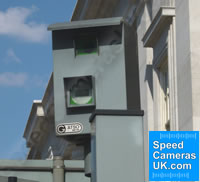
 Traffic light cameras - also known as red light cameras - are fixed enforcement cameras installed at road junctions to photograph vehicles that pass through a red light. They are one of the most widely recognised types of road enforcement camera in the UK, though many drivers are unaware that a growing number of them can now also catch speeding motorists at the same time.
Traffic light cameras are triggered using one of two methods: ground loops embedded in the road surface, or radar technology. The camera faces oncoming traffic - it is forward facing, unlike the Gatso which faces away - and captures images of the front of the offending vehicle including the driver's face and number plate.
Originally deployed solely to enforce red light compliance, many modern installations can also measure vehicle speed and issue speeding notices in addition to red light penalties. This means a driver who jumps a red light at speed could face two separate fixed penalty notices from a single camera trigger.
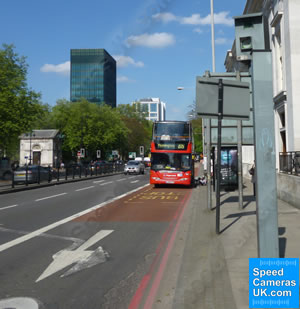
Do you have a question about red light cameras? You can read UK motorists' red light questions and answers and also submit your own unanswered question via our online form. Alternatively, read UK drivers' traffic light camera comments.
How do traffic light cameras work?
There are two main detection methods used by traffic light cameras in the UK:
Ground loop detection: The most common method uses inductive loops - wire coils cut into the road surface just before and just after the stop line. When the traffic lights turn red, the loop system becomes active. Any vehicle that passes over a loop after the light has turned red is detected, and the camera is automatically triggered to photograph the offending vehicle. The loops also record the speed of the vehicle as it crosses, providing a secondary data source where the camera has speed enforcement capability.
Radar detection: Radar-based traffic light cameras work in a similar way to the Gatso speed camera. A radar beam is directed across the road at the stop line position. When a vehicle crosses the beam after the light has turned red, the radar detects the movement and triggers the camera. This method can also simultaneously measure the speed of the passing vehicle.
In both cases, when a vehicle is detected passing through a red light, the camera takes at least two photographs in quick succession. The first shows the vehicle at or just past the stop line while the signal is red. The second, taken a fraction of a second later, shows the vehicle further into the junction - confirming it continued to travel through rather than stopping immediately after a late trigger. Both images capture the traffic signal state, the vehicle number plate, make and model, and a date and time stamp.
What do traffic light cameras photograph?
Because traffic light cameras are forward facing, they photograph the front of the offending vehicle as it approaches and passes through the junction. This means both the vehicle's number plate and, in most cases, the driver's face are visible in the images. This is in contrast to a rear-facing camera like the Gatso, which only captures the back of the vehicle.
The photographic evidence from a traffic light camera will typically show:
- The vehicle at the stop line or just past it, with the traffic light clearly showing red
- A second image confirming the vehicle's continued progress through the junction
- The vehicle's number plate, make, model and colour
- A date, time and location stamp
- The recorded speed of the vehicle at the point of crossing, where speed enforcement is also active
Can traffic light cameras also catch you speeding?
Yes - and this is something many drivers are unaware of. Modern traffic light cameras are increasingly configured to measure and enforce speed limits as well as red light compliance. If a vehicle passes through a red light at a speed above the posted limit, the driver may receive both a red light fixed penalty notice and a separate speeding fixed penalty notice from the same camera activation.
The Home Office has approved the conversion of over 1,000 existing red light cameras to add speed enforcement capability, significantly increasing the number of junctions at which both offences can be recorded simultaneously.
Camera types that can operate as dual-purpose red light and speed enforcement systems include Gatsometer traffic light cameras and the Truvelo D-Cam. The Truvelo D-Cam, when configured for red light enforcement, uses infrared illumination - meaning there may be no visible flash even when it is triggered.
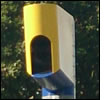
Pictured above: The Truvelo D-Cam can be configured to enforce both speed limits and red light offences.
Do traffic light cameras always flash?
Most traditional traffic light cameras do produce a visible flash when triggered - similar to the white flash associated with a Gatso. Because the camera is forward facing, the flash is directed towards the approaching driver rather than away, which is why many people are aware of being photographed at a red light. However, some newer dual-purpose installations - particularly those using Truvelo D-Cam technology - use infrared illumination and produce little or no visible light when triggered. As with any speed camera, the absence of a visible flash does not mean the camera did not activate.
How can I identify a traffic light camera?
Traffic light cameras share some common characteristics that help distinguish them from other roadside cameras:
- They are forward facing - the camera lens points towards approaching traffic, not away from it
- They are usually mounted on a dedicated pole near the junction, or on the traffic light column itself
- They are typically painted yellow, though some installations are grey or white
- The camera housing is usually a small rectangular box, positioned to cover the stop line of one or two lanes
- Lines may be painted on the road surface near the stop line as a secondary speed verification method
- A second camera unit is sometimes present, covering an adjacent lane or the opposite direction of travel
Not every camera-like box at a junction is a traffic light enforcement camera - some are used purely for traffic flow monitoring and have no enforcement function. Only cameras that are Home Office Type Approved can be used to generate prosecutions.
Traffic light camera locations
What is your view and experience with red light cameras in the UK? Tell us and read more traffic light camera comments. Alternatively, if you have a question about red light cameras, please see our red light camera Q&A page.
Want to know where the UK's traffic light cameras are located before you drive? Here at SpeedCamerasUK.com we have a UK speed camera location database covering thousands of fixed camera sites. This database also includes Gatso, SpeedCurb, Truvelo, Truvelo D-Cam, SPECS, VECTOR, Peek speed cameras and more. Read more about all speed camera types.
Search traffic light camera locations in our database ->
Penalties for red light and traffic light camera offences
Running a red light caught on camera in the UK carries a fixed penalty of:
- £100 fixed penalty fine
- 3 penalty points added to your driving licence
More serious cases - particularly where the offence endangered pedestrians or other road users - may result in a court summons rather than a fixed penalty, potentially leading to a higher fine or a driving ban. If the camera also records a speeding offence at the same junction, a separate fixed penalty notice may be issued for that too, meaning a driver could face a combined total of £200 and 6 penalty points from a single incident.
The penalty for speeding follows the same scale as any other speed camera: a minimum £100 fine and 3 points, rising to a court summons for more serious cases with the code SP10, SP20, SP30, SP40 or SP50. For full details read more about speeding fines. For official UK government guidance visit GOV.UK speeding penalties.