
Variable speed cameras are found on many of the UK's busiest motorways, including the M1, M25 and M62. Unlike other fixed cameras - such as the Gatso or Truvelo - which always enforce a single static speed limit, variable speed cameras are linked to the motorway's electronic sign system and automatically enforce whichever speed limit is currently being displayed on the overhead gantry signs. That limit can change within seconds at the press of a button by operators at a regional traffic control centre.
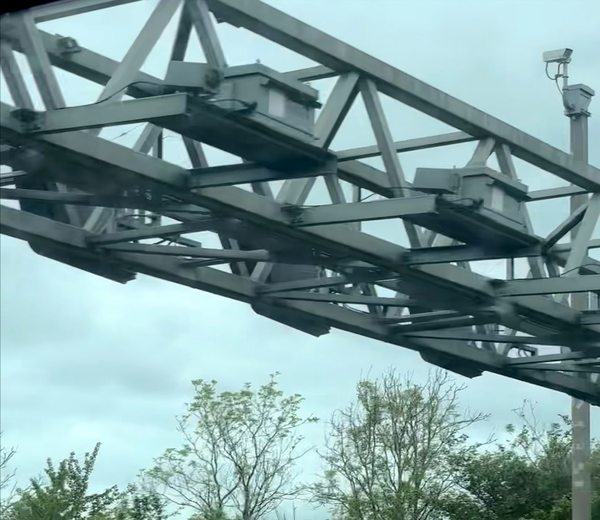
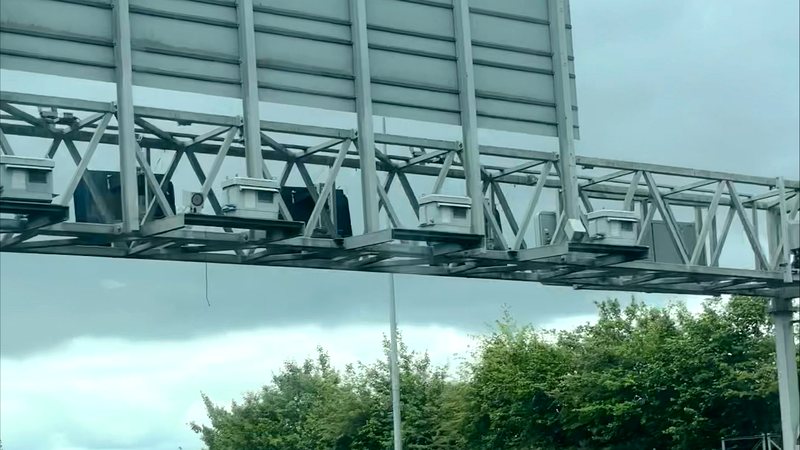
These cameras are mounted on overhead gantries above each lane of moving traffic. A single gantry can house up to four or five individual camera units, each targeting a separate lane - meaning every lane of the motorway is covered simultaneously. When the displayed speed limit drops from 70 mph to, say, 50 mph during a period of congestion, the cameras update automatically to enforce the new, lower limit.
The camera technology most commonly used at variable speed locations is either the Gatso (including digital gantry-mounted variants) or, increasingly on newer smart motorway schemes, the HADECS 3 system manufactured by Redflex Traffic Systems. Both systems are capable of detecting and recording a speeding vehicle without requiring any film, and both operate digitally - transmitting offence data directly to a remote processing centre.
What are variable speed cameras and how do they work?
Variable speed cameras are fixed speed enforcement cameras installed on gantries above the carriageway of a smart motorway or managed motorway. Their defining characteristic is that they do not enforce a single, fixed speed limit - they enforce whatever limit is currently active according to the overhead signs, which may change multiple times per hour in response to live traffic conditions.
When no variable speed limit is in force and the national speed limit applies, the cameras may be set to enforce 70 mph. When operators reduce the limit to manage congestion, an incident, or roadworks, the cameras adjust automatically to enforce the new lower limit. Any driver exceeding the displayed limit - whether that is 70 mph, 60 mph, 50 mph or 40 mph - may be caught and prosecuted.
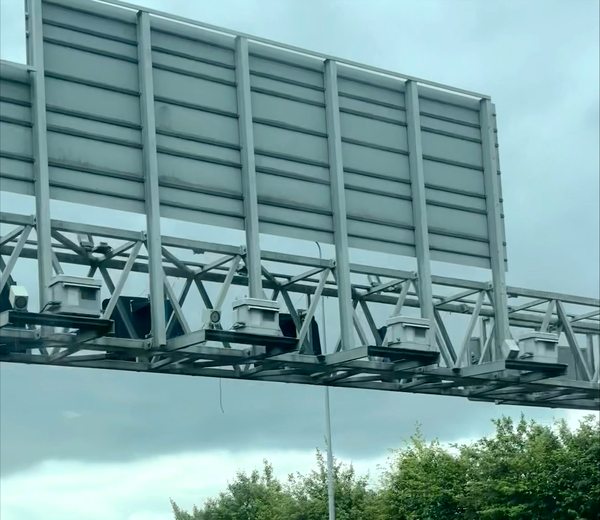
Variable speed cameras are connected to the motorway's variable message sign (VMS) control system. Operators at a regional traffic control centre can change the displayed speed limit on the overhead gantry signs at any time. On smart motorways using HADECS 3 cameras, a pole-mounted external aspect verification (EAV) unit continuously monitors the displayed limit on the signs and automatically updates the camera enforcement threshold to match. This means the camera system responds in real time to every limit change without any additional manual intervention.
When a vehicle exceeds the active speed limit in a monitored lane, the camera is triggered. Offence data - including the vehicle's speed, lane, photographic evidence and a time and date stamp - is transmitted digitally to a remote evidence receiving and control unit for processing. Where the evidence meets the prosecution threshold, a Notice of Intended Prosecution (NIP) is automatically prepared.
One motorist caught by a variable speed camera on the M1 wrote: "I received a NIP for exceeding a variable speed limit on the M1 at 4.41am. I was doing 58 mph when the matrix sign was showing 50 mph, yet the two gantries before were showing 60 mph and the next one showed the national speed limit. There was no congestion, no roadworks, no debris and no reported accident." This account highlights an important point: if a limit is displayed on the overhead gantry you are passing, it is enforceable - regardless of what the signs ahead or behind you may show.
Variable speed limits explained
Variable speed limits are set and managed by operators at regional traffic control centres who monitor live motorway conditions via CCTV. Speed limits are typically reduced for one or more of the following reasons:
- Congestion - slowing traffic early to prevent stop-start conditions further ahead
- An incident or breakdown - reducing speeds in advance of an obstruction
- Roadworks - protecting workers and narrowed lanes
- Debris or spillage on the carriageway
- Poor visibility due to fog, heavy rain or spray
- Hard shoulder running - when the hard shoulder is opened as an additional running lane, speed limits are often reduced to manage the increased density of traffic
Speed limits can be reduced to 60 mph, 50 mph or 40 mph. All changes are communicated to motorists via the overhead gantry signs - no variable limit is enforceable unless it is clearly displayed. If a gantry sign is blank or showing the national speed limit symbol, the national limit applies at that point.
Are variable speed cameras always on?
The answer depends on the camera technology in use and the policy of the operating authority. Traditionally, gantry-mounted variable speed cameras were only active when a reduced variable speed limit was displayed. When the national 70 mph limit applied, they were generally not enforcing.
However, on smart motorways using HADECS 3 technology, the cameras are capable of enforcing the national 70 mph limit at all times - not just when a reduced limit is in force. This has been a source of debate. In 2015, the Bedfordshire Police and Crime Commissioner stated he was actively considering permanently activating the M1 variable speed cameras between junctions 10 and 13 at all times to generate revenue for the force, unless the force's grant funding was adjusted to reflect the county's policing challenges. Whether cameras are enforcing at 70 mph on a specific stretch depends on the instructions issued to that system by the relevant authority.
The safest approach is to treat every variable speed camera as potentially active at all times.
Variable speed cameras vs average speed cameras
Variable speed cameras and average speed cameras are often confused, but they work in fundamentally different ways:
- Variable speed cameras measure your speed at a single point - the camera position - and enforce whichever limit is currently displayed on the overhead signs. That limit changes in response to live traffic conditions and may not always be the national limit.
- Average speed cameras such as SPECS and VECTOR measure your average speed across a distance of road between two or more camera positions, and enforce a fixed posted speed limit 24 hours a day, 7 days a week regardless of traffic conditions.
The practical implication is that you cannot avoid a variable speed camera by braking before the camera and accelerating away - because it measures your speed at that exact point. With average speed cameras you also cannot do this effectively, but for a different reason: your average across the entire zone is what counts. With variable speed cameras on a gantry, your speed as you pass directly beneath the camera is what is recorded.
Where are variable speed cameras used in the UK?
Variable speed cameras are installed on smart motorways across England. Confirmed locations include:
- M1 - Derbyshire and South Yorkshire
- M3 - Surrey and Hampshire
- M4 / M5 - Somerset
- M6 - around Birmingham and Staffordshire
- M20 - Kent
- M25 - Surrey and Kent
- M62 - West Yorkshire
All of these are managed using active traffic management (ATM) techniques, where variable speed limits, lane signals and, in some cases, hard shoulder running are combined to increase effective capacity during busy periods. The number of smart motorway sections - and the cameras on them - continues to grow as Highways England's smart motorway programme extends to more sections of the network.
Penalties for variable speed camera offences
Exceeding a variable speed limit enforced by a gantry-mounted camera carries exactly the same penalties as any other speeding offence in the UK. Crucially, the speed limit enforced is whichever limit was displayed on the overhead gantry at the time you passed beneath it - even if the limit shown on the next gantry ahead was different:
- £100 fixed penalty fine
- 3 penalty points added to your driving licence
- An offer to attend a speed awareness course in some cases, as an alternative to points
More serious cases - particularly those involving very high recorded speeds relative to the displayed limit - may result in a court summons, higher fines or a driving ban. The NIP will carry the relevant code: SP10, SP20, SP30, SP40 or SP50. For more information read our speeding fines guide. For official UK government guidance visit GOV.UK speeding penalties.