 A speed camera app turns your smartphone into a speed camera warning device. It uses GPS technology to match your position against a database of camera locations and alerts you as you approach each one - the same principle as a dedicated GPS detector, delivered through an app on a phone you already own.
This guide explains how speed camera apps work, which apps are available in the UK, their practical limitations compared to dedicated devices, and what to consider when choosing one. SpeedCamerasUK.com has been tracking UK speed camera locations since 2000.
How speed camera apps work
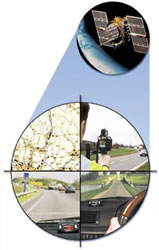
Speed camera apps use GPS technology and work on the same principle as a dedicated GPS detector. The app holds or connects to a database of speed camera locations stored as GPS co-ordinates. As you drive, the app tracks your position and compares it continuously against the database. When you approach a recorded camera location, the app triggers an alert.
The alert typically shows your current speed, the posted speed limit for that road, and the type of camera ahead - fixed, mobile or average speed zone. An audible warning accompanies the visual alert, so you do not need to look at the screen to know a camera is approaching. The alert distance can usually be adjusted in the app settings.
Speed camera apps work using GPS position alone - they do not use radar or laser detection of any kind. This is why they can alert you to average speed camera zones such as SPECS and VECTOR, which emit no detectable signal. Any camera type that can be recorded as a GPS co-ordinate can be included in an app database.
Some apps use a static database that is downloaded to the phone in advance and used offline. Others connect to a live server and update in real time as new camera locations are reported by users - a crowd-sourced model that can be particularly useful for mobile camera hotspots. Both fixed and mobile camera locations are covered by most apps, though the accuracy and currency of mobile camera data varies considerably between apps and between regions.
Apps available in the UK
The most widely used speed camera app in the UK is Waze. It is a full navigation app that uses crowd-sourced reporting from other drivers to show speed camera locations in real time on the map. When another Waze user reports a camera, it appears on the map for nearby drivers and triggers an alert as they approach. Fixed camera locations are included in the permanent database. Waze is free to use.
Google Maps also shows speed camera locations in the UK as part of its standard navigation. Coverage is derived from its own database rather than real-time crowd-sourcing. Speed camera alerts appear on screen as you approach a recorded location. Like Waze, Google Maps is free.
TomTom GO Navigation is a dedicated navigation app that includes speed camera alerts as part of its subscription service. It uses TomTom's own map and camera database, which is updated regularly. Unlike Waze and Google Maps, it is not free - it operates on a subscription model. Check the App Store or Google Play for current pricing, as subscription terms change.
CameraAlert is a UK-specific app focused solely on speed camera alerts rather than full navigation. It is designed to run alongside your existing navigation app rather than replace it, displaying an alert overlay when you approach a camera. It offers both a free tier and a paid subscription with access to a fuller database and more frequent updates. Current pricing is available in the App Store and Google Play.
App availability, features and pricing change regularly. Before downloading any app, check the current reviews and feature list in the relevant app store to confirm it meets your needs.
Limitations compared to dedicated devices
The most significant practical limitation of a smartphone app is power. Your phone needs to remain charged for the duration of the journey. GPS, a live data connection and a screen running continuously are among the heaviest drains on a phone battery - a long journey can deplete a phone faster than a car charger can replenish it, depending on the charger and the phone. A dedicated GPS detector or sat nav draws power from the cigarette lighter socket independently and does not compete with any other function for battery.
For apps that rely on live crowd-sourced data, a mobile data connection is required. In areas with poor coverage - rural roads, certain motorway stretches, tunnels and some upland routes - real-time camera reports may not arrive, may arrive late, or may not be available at all. A static downloaded database works without a signal, but will not include recently reported mobile camera sites.
Your phone needs to be safely and legally mounted in the vehicle before you start driving. Using a handheld phone while driving is a criminal offence in the UK, carrying a fixed penalty of six points and a fine. A phone holder is a legal requirement for using any phone-based navigation or alert app while driving. This is an additional item to buy and install if you do not already have one.
A dedicated device is always on and ready from the moment you start the car. There is no screen to unlock, no app to launch, no notification prompts to dismiss before you pull away. For drivers who use speed camera warnings on every journey, removing that friction is a practical advantage.
For drivers who travel frequently on unfamiliar routes or drive for work, a dedicated GPS detector or a sat nav with a built-in speed camera database offers a more dependable solution. A smartphone app is a reasonable starting point for occasional use or for drivers who want to try camera alerts before committing to a separate device.
What to look for when choosing an app
The most important distinction to understand before choosing an app is whether it uses a static pre-downloaded database or a live crowd-sourced feed. A static database works without a mobile data connection, which makes it reliable on routes with patchy signal, but it reflects only the camera locations that were known when you last updated it. A live app gives you more up-to-date mobile camera reports in areas with good coverage, but is of limited use where signal is poor. Some apps combine both - a downloaded base database supplemented by live reports when connected.
Check which camera types the app covers. Most apps include fixed cameras and average speed camera zones as standard. Mobile camera coverage varies - some apps rely entirely on user reports for mobile sites, which means coverage in less-travelled areas can be sparse. If mobile cameras are a concern for your regular routes, check how the app handles them specifically.
Database update frequency matters more for fixed cameras than it might seem. Fixed cameras are occasionally decommissioned, relocated or upgraded, and new ones are installed. An app whose database is updated monthly is more likely to reflect the current position than one updated quarterly.
Consider whether you want the app to provide full navigation or to operate as an alert overlay alongside a separate navigation app. Full navigation apps such as Waze and Google Maps handle both jobs in a single screen. A dedicated alert app such as CameraAlert is designed to run in the background and alert you without replacing your navigation. Whether one approach suits you better depends on whether you use your phone for turn-by-turn navigation already.
Battery and data usage are worth checking in app reviews before downloading. GPS-intensive apps can run warm on some phones, and live data apps consume mobile data throughout the journey. If you are on a limited data plan, check the typical data usage per hour before enabling live features.
Finally, consider whether the free tier of an app meets your needs before paying for a subscription. For many drivers using main roads in well-covered areas, the free version of Waze or Google Maps provides adequate camera coverage at no cost. A paid subscription may be worth considering if you drive regularly on routes where mobile camera coverage in the free tier is noticeably incomplete.
Compare all speed camera warning devices
Last updated: May 2026.