Dedicated GPS speed camera detectors
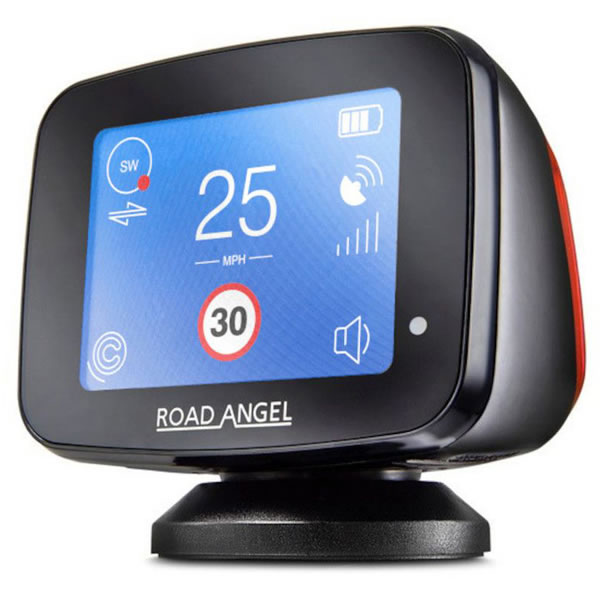
A dedicated GPS speed camera detector is a single-purpose device. It mounts on your windscreen, powers from the cigarette lighter socket, and does one job extremely well - warning you of speed camera locations in the road ahead.
The device holds a database of fixed and mobile speed camera locations across the UK and, in many cases, Europe. As you approach a location in the database, the screen displays the camera type, the road speed limit, and your current speed. An audible alert sounds as you get closer.
Unlike radar and laser detectors, a GPS detector does not attempt to detect the camera's own signal. It simply knows where cameras are recorded in its database. This is why GPS detectors can warn you of SPECS and VECTOR average speed camera zones, which emit no detectable signal at all.
Many current GPS detectors also include a speed limit database covering all road types, not just camera locations - so the device doubles as a speed limit reminder even where no camera is present. Both the Snooper MY-SPEED PLUS and Snooper MY-SPEED DVR PLUS include this as standard, with free database subscriptions.
The Road Angel Pure One goes a step further with a built-in SIM card that delivers real-time speed camera updates as they are reported - making it particularly useful for mobile camera hotspot warnings.
A speed camera detector is only as good as its database. Fixed camera locations change relatively slowly, but mobile enforcement hotspots and temporary average speed camera zones can appear and disappear quickly. Devices with live or frequently updated databases generally provide more reliable coverage than systems updated only occasionally. When comparing devices, check how the database is updated - whether automatically over a mobile connection, via Wi-Fi, or by connecting to a computer - and whether the subscription is included or costs extra.
Road Angel Pure One
£249.99
- Live real-time speed camera alerts via built-in SIM
- Covers fixed, mobile and average speed camera zones
- No manual updates needed - always current
- Speed limit display on all road types
- Compact windscreen-mount design
- Subscription from £99.99 per year
View on ActiveGPS →
Best for: drivers who want a simple, always-on, dedicated solution that works reliably without competing with their phone.
Browse GPS speed camera detectors at ActiveGPS.co.uk
Sat navs with speed camera alerts
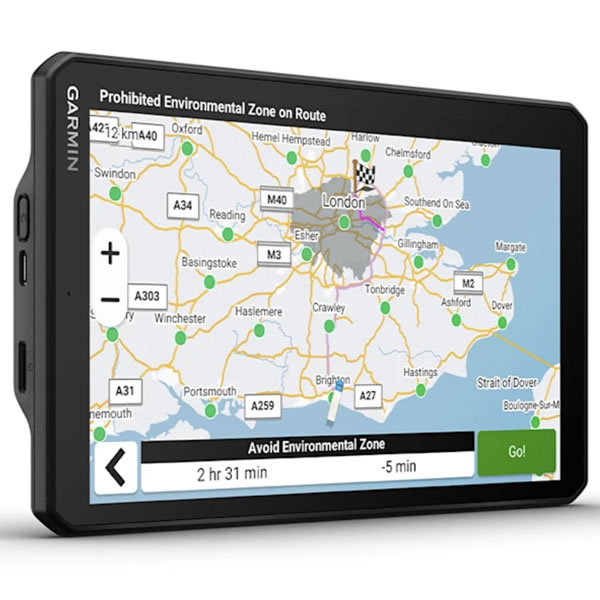
A sat nav with an integrated speed camera database gives you full navigation alongside speed camera warnings - one device covering both jobs. Current models from Garmin display camera locations on the map and provide audible and on-screen alerts as you approach. Speed limits are shown continuously, not just at camera sites.
The right sat nav depends on the type of vehicle you drive. The needs of a car driver, an HGV driver, a motorhome owner and a motorcyclist are all different, and there are sat navs designed specifically for each.
Car drivers - the standard Garmin range offers speed camera alerts on current models. Most include free lifetime map and speed camera updates, so there is no ongoing subscription cost. View the car sat nav range at ActiveGPS.co.uk.
Truck and van drivers - HGV-specific sat navs such as the Garmin dezl range are essential for commercial drivers. Speed limits differ for trucks depending on road type and vehicle weight, and the dezl takes this into account. Speed camera alerts are included. View the truck sat nav range at ActiveGPS.co.uk.
Motorhome and caravan drivers - the Garmin Camper range routes around low bridges, weight restrictions and unsuitable roads for larger vehicles. Speed camera alerts are built in. Knowing you are on the right road matters as much as knowing where the cameras are. View the motorhome and caravan sat nav range at ActiveGPS.co.uk.
Motorcyclists - motorcycle sat navs are built to withstand the elements. Garmin's zumo range is weatherproof and glove-friendly, with Bluetooth connectivity to compatible helmets. Speed camera alerts are supported. View the motorcycle sat nav range at ActiveGPS.co.uk.
Garmin dezl LGV1020 Truck Sat Nav
£769.99
- 10-inch touchscreen designed for HGV and LGV drivers
- Custom vehicle routing by height, weight and length
- Speed camera alerts with free lifetime European maps
- BirdsEye satellite imagery for loading bay arrival planning
- Bluetooth hands-free and Wi-Fi connectivity
- Truck-specific POIs including stops, parking and weigh stations
View on ActiveGPS →
Best for: drivers who want navigation and speed camera warnings combined in a single device, or who have specific vehicle requirements that a standard device does not cover.
Read the full sat nav buying guide
Dash cams with speed camera alerts
A dash cam records video of your journey continuously. Most drivers buy one primarily as a protective measure - if you are involved in an incident that is not your fault, footage from a dash cam is recognised by UK insurers and is admissible as evidence.
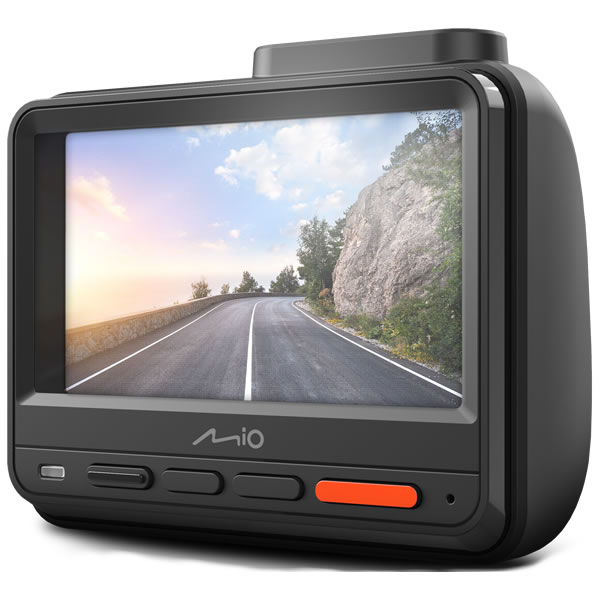
Some dash cams go further and include optional GPS speed camera database alerts alongside the recording function. The Snooper MY-SPEED DVR PLUS is the clearest example - it is a GPS speed camera detector and a dash cam in a single windscreen-mounted device.
Front-only dash cams record the road ahead. Front-and-rear systems add a second camera covering the rear window, giving you protection against tailgating and rear-end collisions. If you do a lot of motorway driving or tow a caravan or trailer, front-and-rear recording is worth serious consideration.
Recording quality, screen size, parking mode and G-sensor sensitivity all vary by model. For a detailed guide to choosing the right dash cam for your needs, see our dedicated buyers guide below.
Mio MiVue 935W
£179.99
- 4K ultra HD recording with Sony STARVIS sensor
- HDR recording for clear footage in all lighting
- Average speed camera zone alerts
- Built-in Wi-Fi with quick QR code pairing
- Forward collision and lane departure warnings
- 3-year manufacturer warranty
View on ActiveGPS →
Best for: drivers who want video evidence protection alongside camera alerts, or who prefer a single combined device rather than separate units.
Read the full dash cam buying guide
Browse dash cams at ActiveGPS.co.uk
Smartphone apps
Several smartphone apps provide speed camera alerts using the same principle as a dedicated GPS detector - a database of known camera locations, with warnings triggered as you approach. Some popular navigation apps such as Waze also crowd-source mobile camera reports from other drivers in real time.
The appeal is cost - many apps are free or available for a small subscription, and you are using a device you already own. The limitations are practical. Your phone needs to be mounted safely, charged, and for live features, connected to mobile data. In areas with poor signal, real-time updates may not be available. The app also competes with your phone's battery, map navigation, and potentially music or calls.
Apps are a reasonable starting point for occasional use or for drivers who are not yet sure whether a dedicated device is worth the investment. For drivers who regularly use the same routes or want a reliable always-on warning, a dedicated device is a more dependable solution. Many drivers also access speed camera alert apps via Apple CarPlay or Android Auto, which display app content through the car's built-in screen - a useful middle ground between a phone mount and a dedicated device.
Best for: occasional or light use, or as a complement to another device when driving a borrowed or hire vehicle.
Read the full smartphone app guide
Radar and laser detectors
A radar and laser detector works differently from all of the above. Rather than using a database, it listens actively for the radar or laser signals emitted by certain speed cameras and police speed guns, and alerts you when it detects them.
In the UK, radar and laser detectors are currently legal to own and use. However, there are several important limitations you should understand before buying one.
Not all cameras are detectable. Only cameras that actively emit a radar or laser signal can be detected this way. Gatso cameras use radar and are detectable. But SPECS, VECTOR, Truvelo, SpeedCurb and most other modern camera types use inductive road loops or number plate recognition and emit no signal at all. A radar or laser detector gives you no warning of these.
False alerts are common. Automatic doors, burglar alarms, adaptive cruise control systems in other vehicles and roadside safety equipment all emit signals that a radar detector may interpret as a speed camera. In urban areas particularly, false alerts can be frequent enough to become distracting.
Illegal in many European countries. If you drive on the Continent, radar and laser detectors are banned in France, Germany, the Netherlands, Switzerland and many other countries. Being found with one - even switched off - can result in a fine and confiscation of the device. A GPS-based detector or sat nav remains the only legally safe option for European driving.
We do not currently stock radar or laser detectors at ActiveGPS.co.uk. For most UK drivers, a GPS-based speed camera detector or a sat nav with a camera database provides broader coverage, fewer false alerts and legal protection across Europe.
Read more about how radar and laser detectors work
Are speed camera detectors legal in the UK?
GPS-based speed camera detectors are fully legal in the UK. They work by alerting you to the recorded locations of speed cameras held in a database - they do not detect, interfere with or jam camera equipment in any way.
The legal position for GPS devices was confirmed by the Department for Transport during the Road Safety Bill discussions in 2004. GPS warning devices were explicitly excluded from any proposed restrictions, as they complement the government's policy of keeping camera sites visible and conspicuous to drivers.
Radar and laser detectors are currently legal to use in the UK but illegal in many European countries. Speed camera jammers - devices that actively interfere with camera operation - are illegal throughout the UK.
Read the full guide to speed camera detector legality
Installing your device
Once you have chosen a device, fitting it correctly makes a significant difference to how well it works. Most speed camera detectors and sat navs mount to the windscreen using a suction cup bracket and power from the cigarette lighter socket. The device should be positioned outside the area swept by the windscreen wipers and within the driver's natural field of view without obstructing sightlines.
Drivers with heat reflective windscreens - fitted to certain Renault, Citroen and some Peugeot models - may find that the metallic coating in the glass blocks GPS satellite signals. The solution is an external GPS antenna placed away from the affected area of the glass. Not all devices support an external antenna, so this is worth checking before buying if your vehicle has this type of windscreen.
For motorcyclists, standard windscreen-mounted devices are not suitable. Dedicated weatherproof motorcycle sat navs with handlebar mounting and Bluetooth helmet audio are the right solution.
Read the full installation guide


 There are five types of device that warn you of speed cameras on UK roads - a dedicated GPS detector, a sat nav with a built-in camera database, a dash cam with optional camera alerts, a smartphone app, or a radar and laser detector. Each works differently, suits different drivers, and carries different considerations if you drive in Europe.