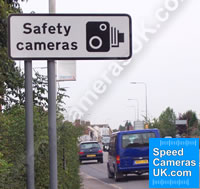
 Being caught by a speed camera or stopped by police is a stressful experience. Whether you have just seen a flash in your rearview mirror or a letter has landed on your doormat, this guide walks you through the process from start to finish - what arrives in the post, what your options are, and what the consequences could be.
SpeedCamerasUK.com has been tracking UK speed camera locations since 2000. This section explains the legal process so you know exactly where you stand.
What arrives in the post - the NIP
If a speed camera catches your vehicle, nothing happens at the roadside. Within 14 days, the registered keeper receives two documents: a Notice of Intended Prosecution (NIP) and a Section 172 notice requiring them to identify who was driving.
You must respond within 28 days. Failing to do so is a separate offence - six penalty points and a fine of up to £1,000, regardless of the original speeding offence.
If you were stopped by police at the roadside, the NIP is served verbally on the spot and no letter is required.
The NIP is often the most confusing part of the process, particularly if you were not the registered keeper or were not the one driving at the time.
What to do when a NIP arrives - step by step
Your three options
Once the driver is identified you will receive a Fixed Penalty Notice (FPN) or a court summons. Most camera offences result in an FPN, which gives you three choices.
- Accept the fixed penalty. Pay £100 and accept three penalty points on your licence. No court appearance required.
- Attend a speed awareness course. If eligible, you may be offered this as an alternative to the fine and points. It costs around £90 to £100, takes four hours, and keeps your licence clean. Not everyone qualifies - and it is never guaranteed.
- Go to court. You can reject the FPN and request a hearing. If found guilty, the fine will in most cases be higher and you may receive more points than the fixed penalty would have given you.
Choosing the right option depends on your speed, your licence history, and whether a course has been offered. Each option is explained in full in the sections below.
How speeding fines are calculated
The £100 fixed penalty is the minimum - not the only possible outcome. For offences referred to court, fines are calculated as a percentage of your weekly income and increase with how far over the limit you were driving.
The system uses three bands, ranging from a fine equivalent to 50% of your weekly wage for minor speeding up to 175% for the most serious cases. On top of the fine, you may receive between three and six penalty points or a driving ban.
For most drivers caught slightly over the limit, the fixed penalty applies. But if your case goes to court, the financial consequences can be considerably larger than you might expect - and once increased insurance premiums are factored in, the total cost often exceeds the fine itself over time.
See the exact fine bands, speed thresholds and worked examples
Penalty points and driving bans
Every speeding conviction adds points to your licence. They stay on your record for four years and count towards a ban for the first three.
Reach 12 points within three years and you face a mandatory disqualification - typically six months. New drivers face a much stricter rule: just six points within the first two years means your licence is revoked and you must retake both the theory and practical tests from scratch.
If you are already carrying points from a previous offence, a new conviction could push you closer to a ban than you realise.
Check the full rules on totting up, disqualification lengths and new driver limits
The speed awareness course
For eligible drivers this is often the preferable choice. You avoid the fine, you avoid the points, and you avoid the insurance impact that penalty points bring.
To qualify, your speed must fall within the eligible range - not so fast that you exceed the upper threshold - and you must not have attended a course within the last three years. The course takes around four hours and can be completed in person or online.
It is not a test. But you are expected to attend for the full duration and participate actively throughout.
See if you qualify and find out what to expect on the day
Impact on your car insurance
Penalty points must be declared to your insurer and typically increase your premium at renewal. Three points for a minor offence can add a meaningful amount to your annual cost - and that increase applies for as long as the points remain active on your licence.
Attending a speed awareness course avoids points entirely and generally has a smaller effect on your premium, though some insurers do ask whether you have attended one.
Either way, a speeding offence almost always costs more than the fine itself once insurance is factored in.
See exactly how penalty points affect your premium and for how long
Going to court
Most speeding offences are resolved by fixed penalty and never reach a courtroom. You will be summoned if your speed was too excessive for a fixed penalty, if you rejected the FPN and requested a hearing, or if you failed to respond to the Section 172 notice.
At court, magistrates consider the offence, your income, and any aggravating or mitigating factors. Pleading guilty early typically reduces the fine. Aggravating factors - driving near a school, poor weather, or a previous record - can increase it considerably.
What to expect at a speeding court hearing and how to prepare
How to avoid it happening again
If you regularly drive in unfamiliar areas or on routes you do not know well, knowing where speed cameras are located can help you avoid repeat offences. SpeedCamerasUK.com holds a database of over 4,200 fixed speed camera locations across the UK, updated by motorists.
A GPS speed camera detector or a sat nav with a live camera database will alert you to locations before you reach them - giving you time to check your speed rather than react to a flash.
If a retest is already on the cards, Active Learner Driving can help you get back up to test standard.
Browse speed camera detectors at ActiveGPS.co.uk
Search the UK speed camera database
Last updated: September 2026. This page is for general information only and does not constitute legal advice. For advice specific to your situation consult a qualified motoring solicitor.